The Digital Battlefield of Ukraine

Just as the Vietnam War is remembered as the ‘first television war’, the war in Ukraine may become known as the ‘first social media war’. Conflicts in the information age have been amplified online, with cyberspace presenting a new battlefield; the Israeli-Palestinian conflict has sparked deep divisions online, for example. However, the invasion of Ukraine is unique in its digital scale and mobilisation, all made possible through the world’s most pervasive weapon – the smartphone. This new digital battleground has been comprehensive in scope – influencing the build-up to the invasion, tactics on the ground, and the actions of the many external actors. These effects are felt across the globe, all whilst setting an entirely new precedent for information conflict across the world.

Understandably, Ukraine is on the front cover of every major newspaper, plastered across television screens, and filling social media feeds. The public outcry has been colossal, and the Western response has been significantly worse than the slap on the wrist Russia, and Putin, were anticipating – or used to. Almost instantaneously, the long-term success of Russian hybrid warfare in eroding the unity of the Western International Order has been utterly curtailed. This ‘hybrid warfare’ strategy transcends passed the traditional conception of war we are used to. It involves assaulting political institutions with election meddling, spreading rampant disinformation online, initiating cyberattacks, and so forth.

Russian hybrid warfare has been slowly infiltrating nation-states for decades, achieving unprecedented success in whittling away the coherence of NATO, simultaneously fracturing public debate throughout the Western world. The Brexit referendum and Donald Trump’s election to President were two key examples of this, with the divisive discourse, seen throughout both campaigns, being spurred on by Russian actors. Regardless of your opinion towards either event, a weakened EU and a NATO-sceptic President was, from a Kremlin-leaning perspective, a positive development in the state of the world. These developments marked an increasingly divided Western order, both internally and externally. Combined with Western Europe’s, especially Germany’s, addiction to Russian gas, engrained dodgy investment in “Londongrad” alongside the ruling Tory party, and the weak commitments to military spending throughout much of European NATO, it seemed Western leaders had little appetite to reverse this trend. Huge events across the last decade highlighted Russia’s contempt for territorial sovereignty, and were met with a meagre international response; Ukraine saw Crimea seized, and Salisbury saw chemical attacks on its streets. Although the West has condemned and punished these moves, the invasion of Ukraine crossed an irreversible line that truly confirms what many commentators have proclaimed for years – Putin’s Russia is willing to go to any length to secure its long-term goal; the protection of the Russian heartland.

Russia is a disinformation superpower. It has been able to manipulate foreign actors and publics exceptionally well for years, using hybrid warfare against the West. The primary objective: undermine and fragment the contemporary Western order, sowing division within and between nations. Russian trolls and bots, nefarious computer programmes, have played a pivotal role in the election of a U.S President, the Brexit referendum, and the fostering of anti-vaccine sentiments. Great debate can be made surrounding whether these generation-defining events would have occurred without Russian support, but they certainly did not hinder the chances of these events from occurring. Russian public diplomacy has been dominated by attempting to sow Western division- highlighting internal domestic issues to foster introspective Western policy, whittling away the coherent external perspective that NATO took during the Cold War. This has been the primary focus of Russia, seeking a multipolar international order. 

This is not their singular objective, however- they have invested great resources in promoting a more positive international view of Russia, or at the minimum, sowing doubt into foreign publics over the Western narrative of Russia. Their armies of trolls and bots spread misinformation and inflammatory rhetoric to distract, downplay and gaslight the global community from Russian wrongdoing. Agreeing with Russia is not their realistic aim- it is persuading foreign publics that “both sides are bad”. This occurs from both official channels, as well as state-sponsored private accounts.

A clear increase in Russian troll accounts being created in the build-up to the invasion (Tim Graham, QUT)

The weeks and months prior to the invasion of Ukraine were wrought with misinformation, in an overarching Russian tactic to make accurate predictions extremely difficult, alongside stirring confusion and doubt in foreign publics. Throughout the build-up of Russian forces on the Ukrainian border, Russia proclaimed they were only engaging in military war games, similarly claiming they were pulling back their forces even when the West announced invasion was imminent. Russia put great focus on spreading disinformation throughout cyberspace, using misleading, and often inflammatory, rhetoric to downplay Russian wrongdoing, gaslighting the global community. In this build-up, I traipsed through Twitter threads, ‘live-threads’ on Reddit, and Facebook posts, discovering countless comments mocking the West for believing in imminent Russian invasion. Many claimed that Western imperialism would make it justified even if it did happen, with further comments filling the discourse around the war with hateful vitriol and divisive discussion.

Russia’s diversionary tactics have been strikingly successful across Western nations, and this is encapsulated in the United States. Republicans and conservatives have traditionally taken hard-line, anti-Russian stances, particularly during the Cold War. This has changed to a degree, with popular Fox News pundits, like Candace Owens and Tucker Carlson, taking Russian-favouring stances dominated by ‘what-aboutism’ and a hyper-fixated view on American politics instead of taking a more global outlook. Just two days before the invasion, Candace Owens retweeted Mike Cenovich’s tweet implying Canadian PM Justin Trudeau was acting more like a dictator than Putin due to his actions surrounding the ‘Freedom Convoy’, as well as blaming NATO for taking the aggressive move of allowing sovereign countries to join a defensive alliance. Meanwhile, Tucker Carlson called Ukraine a “client state for the State Department”, and called aid to Ukraine “adventurism in Eastern Europe”. Narratives like this were echoed across my Facebook feed, littered with posts calling Biden an “idiot” for thinking Russia was about to invade Ukraine. 

Heading into Russian spaces on the internet only intensifies this form of discourse; trips to the ‘subreddit’ /r/Russia on the social media platform Reddit grants a peek into the parallel Russian universe. Traditional propaganda is obvious and well-recognized throughout the drip-fed, state-sanctioned narratives echoed throughout Russian television. But an exploration into Russian propaganda, disguised as organic, on spheres of the internet, exposes that Russian spin has a much deeper grasp on their internal discourse. The subreddit of /r/Russia reveals a cyberspace littered with posts, memes, and comments pushing the alternate reality touted by the Kremlin. Posts proclaim the Ukrainian army as fascists, while the subreddit moderators ‘tag’ posts with labels like “RUSSIA WILL F**K THEM” as they compare Ukrainian children to the Hitler Youth. Tags proudly declare “CRIMEA IS OURS”, giving little regard for Ukrainian territorial sovereignty. Across TikTok, Russian influencers eerily read the same script to their followers, echoing false government claims of a Ukrainian orchestrated genocide in the Donbas. Reading comments under these posts highlights significant levels of ‘what-aboutism’, arguing about Western hypocrisy with limited critical inspection of Russian actions in Ukraine. While I would be the first to criticize much about the Western international order, as well as the actions of states like the UK and the US, these criticisms become hollow when they blindly skip around bombed maternity wards, the butchering of Bucha, and a host of other war crimes which have occurred in Ukraine under a Russian flag.
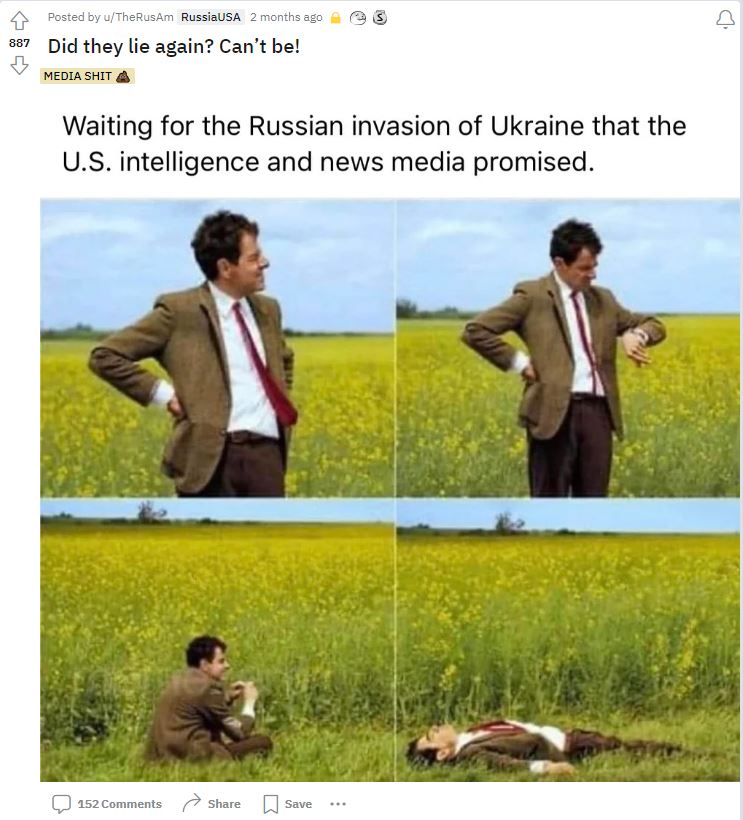
A propaganda meme from the subreddit /r/Russia which aged rather poorly

However, despite this mounting Russian pressure, Putin’s great disinformation machine is losing the information campaign abroad, in a catastrophic fashion. The Kremlin deeply underestimated the modern ability to rally international outcry, spreading war information and propaganda in real-time through the use of smartphones. 

On the morning commute, Western audiences are exposed to videos of Ukrainians run over by Russian tanks. As they eat in the break room they’re shown reporters being ambushed by Russian death squads. Scrolling through social media on their couches at home, they can see the countless harrowing accounts of fleeing Ukrainians. It is hard for any audience to see the harsh realities of war, daily, and remain sympathetic to the Russian narrative of a ‘Special Military Operation’. 

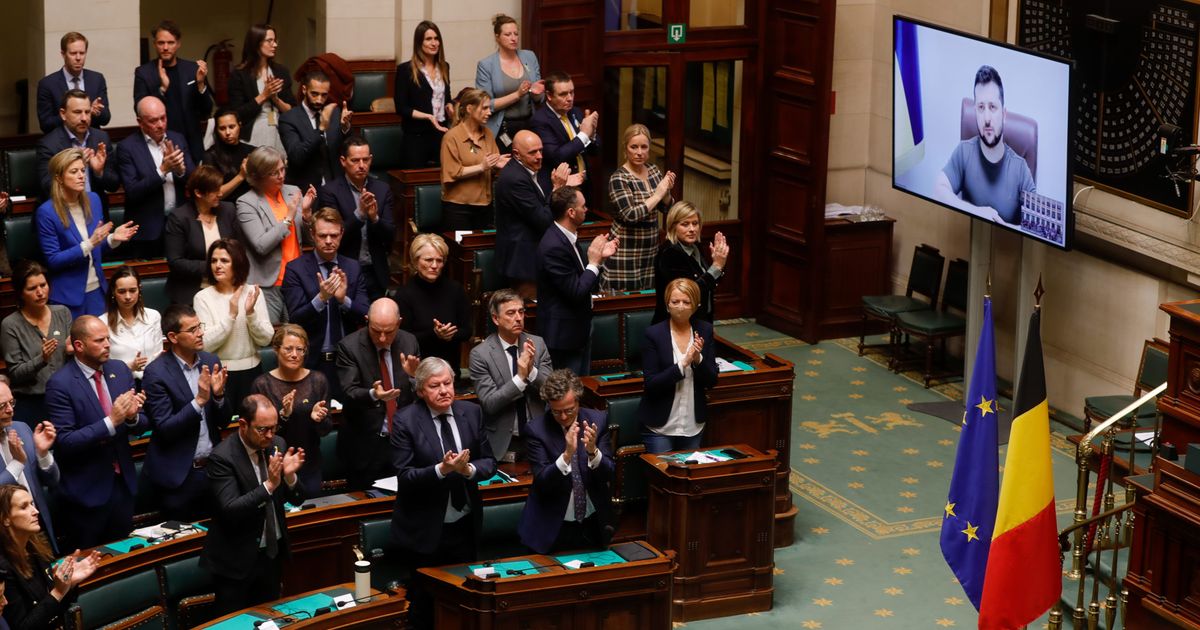
Conversely, the Ukrainian state and people have utilised digital media extremely effectively in amplifying its message to the West. President Zelensky has become an international icon, transmitting video messages to a global audience regularly, providing a charismatic and sympathetic image that embodies the Ukrainian people. These messages simultaneously platform Russian war crimes and immorality, which seem all the more illegitimate as he films himself standing in a bombed-out Kyiv. He is even able to communicate directly with the Russian people, in a way never before possible- giving a virtual speech directly to the Russian public in an effort to push back against their internal propaganda.

Where propaganda in past wars has been restricted to pamphlets and posters, this war marks a clear shift toward online propaganda campaigns, with Tik-Toks, memes, and unconfirmed stories dominating the information war. Internet propaganda can be seen in the urban myths of ‘the Ghost of Kyiv’, videos of civilians crafting Molotov cocktails on an industrial scale, and dramatic pictures of Ukrainians building ram-shackle walls of snow and ice to slow Russian convoys. While there has been a great emphasis on heroic-oriented propaganda in Ukraine’s favour, there has been a notable shift toward increasingly anti-Russian propaganda – such as this popular post proclaiming all Russians as responsible for the horrific scenes in Bucha and condemning any non-protester in Russia as complicit. This marks a worrying trend of dehumanization of Russian people, though the anger and disgust behind the sentiment are arguably justified. It serves to pose a great example of how the invasion has obliterated Russian-leaning sentiment, common in Ukraine prior to the 24th of February.
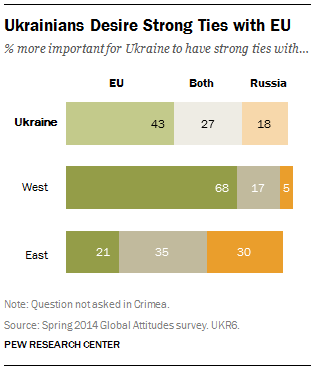
While Ukraine was more West-leaning, Russia did have significant sympathy in Ukraine, which will likely be much lesser now

The digital sphere has not just been used for fighting the information war however, it has been used extremely effectively to fight the physical war itself. It proves especially effective with morale both at home and abroad, as well as providing vital information to the public. Tiktoks are being made in Ukraine for example on how to steal Russian tanks, while the Ukrainian Ministry of Defence distributes virtual graphics on how to make Molotov cocktails, with the vulnerable points of Russian tanks that Ukrainians should aim for.

The brutal, calculated revelation of landmines was that they did not typically kill- they maimed. Soldiers who stood on a landmine would be brought back home and act as a permanent reminder of the cost of war, hurting the morale of their friends and family, while tying down costs and expenses in healthcare and lost manpower. Phones and social media offer a revelation similar to this one. Mothers at home can now excitedly press ‘accept’ on a call from their son, only to find out their son is now a prisoner of war, being forced to call from an unknown position and completely at the mercy of their capturers. You can see videos of several instances of this occurring – with Ukrainians forcing captured Russians to call their family members and inform them that, whilst they are alive, they are captured and in Ukraine. In several of these, the parents thought they were only in a training exercise due to the official Russian stance at that time. This has the potential to be a huge influence on morale in the future, posing a grim potential of facetiming family members, only to witness them getting tortured or executed.

Smartphones further offer the potential to document actions and events which never could have been proven otherwise, such as the horrific scenes from Bucha and across much of Ukraine. Intercepted phone calls and voicemails from Russian soldiers have been revealed, providing evidence of war crimes such as soldiers going on a “children safari”, as well as allowing an insight into the morale and logistics of the invaders. The level of intelligence allowed by smartphones, therefore, is massive, though it also presents the potential of propaganda or counterintelligence with fake calls- as none of these can truly be confirmed. This grand potential was hinted at during the invasion of Crimea, when Russians were proved to be in Ukrainian territory due to geocaching from their social media posts. The scale has only increased in this renewed invasion, with posted TikTok’s revealing the locations of military vehicles, potentially leading to the shelling of key positions. In the blitz the British government mandated a blackout, relying on citizens to turn off their lights, now the Ukrainian government is mandating a social media blackout, relying on citizens to turn off their cameras when it comes to targets – even civilian ones.

So far the invasion of Ukraine has been exceptionally brutal and horrific. Social and digital media has been able to broadcast pain and suffering on a level unparalleled in previous conventional wars. It can be hard to read about the misery 16-year-old Katya is going through, and brutal to watch the heart-wrenching video diary of a young girl from Mariupol. Continuously scrolling through pictures and stories of death and torture, is not healthy or easy. However, it is important to be aware of the level of crimes the Russian government is carrying out in Ukraine- and demand that your government hold them as accountable as possible while remaining vigilant to propaganda. 

There are a host of fantastic charities which are committing greatly to doing everything possible to assist the people of Ukraine, and I would encourage you to consider donating something if your situation permits. Given the situation, it can be easy to fall into the trap of apathy regarding the world or feel much better sliding into blissful ignorance. I understand this completely- there is enough going on in everyone’s lives without bearing the weight of the world on your shoulders – but however small your involvement and awareness can make a difference.
Playing Politics: “Shut Up and Play”

When I sit down and watch Liverpool every week, I want to switch off from it all and forget about the troubles of the world for 90 minutes. I want to get angry about little, inconsequential things like Bobby Firmino missing a sitter, or the Referee forgetting to book his appointment at Specsavers. The desire to forget about the many issues plaguing the world is a popular one, and sport is just one of many entertainment mediums which people use as an escape. But it is a desire that forgets the agency of the players, the reach and potential that sport has in political communication, as well as the pervading influence of politics in all aspects of life.

If you go to the pub and talk about sports in politics, you will likely hear arguments like “keep politics out of sport”, or perhaps the harsher “shut up and play”. While I understand these sentiments, politics is entangled in every facet of life – no more so than in the multi-billion-pound industry that is sport.

With a global reach in the billions, sports are engrained in the culture of society. Regardless of whether or not you believe politics should have a place in sport, in reality, it already does and is firmly entrenched. Sports clubs can have deep socio-political links; Liverpool FC has significant socialist roots, sectarian and nationalist conflicts are at the heart of the Rangers-Celtic rivalry, and FC Barcelona has historically been a symbol of Catalonian independence. The Spanish central government must love Bayern Munich.

Whole nations have been accused of using clubs and hosting sporting events in an effort to engage in public diplomacy, and to ‘sportswash‘ their tarnished reputations. Saudi owned Newcastle United is just the latest in a growing line of countries using sports clubs to push forward a positive image of their nations. Modern athletes such as Colin Kaepernick have had a huge impact on political discourse, building on the influence wielded by sporting greats like Muhammad Ali during his refusal to be drafted in the Vietnam War.

Patriotism and nationalism intertwine with international sport, with players and fans alike belting out their country’s anthem before a game, proudly chanting patriotic hymns about “Ten German Bombers in the Air“. COVID-19 has only increased the direct role of politics within sport, sparking debates over whether to allow crowds, on mandatory vaccination for attendees and even, for a time, if matches should be allowed to continue at all. Yet, the role of politics is not new for sports; it has been central to the field for as long as it is possible to trace.

Quickly skimming through history, this relationship is seen in classical Rome, which used sport to keep the masses distracted and happy, the 532 AD Nika chariot riots in Constantinople which nearly forced their emperor into exile, and in Ancient Greece where an Olympic Truce was established to allow athletes safe travel to the games. Even today, cricket’s best nations trace the colonial map of the former British Empire, with European colonial powers exporting their games across the globe. This series, “Playing Politics”, will discuss the intrinsic role of politics within sports, exploring why you simply cannot disentangle this contradictory couple. Sport always has been, and likely always will be, deeply tied to politics – for better or worse.

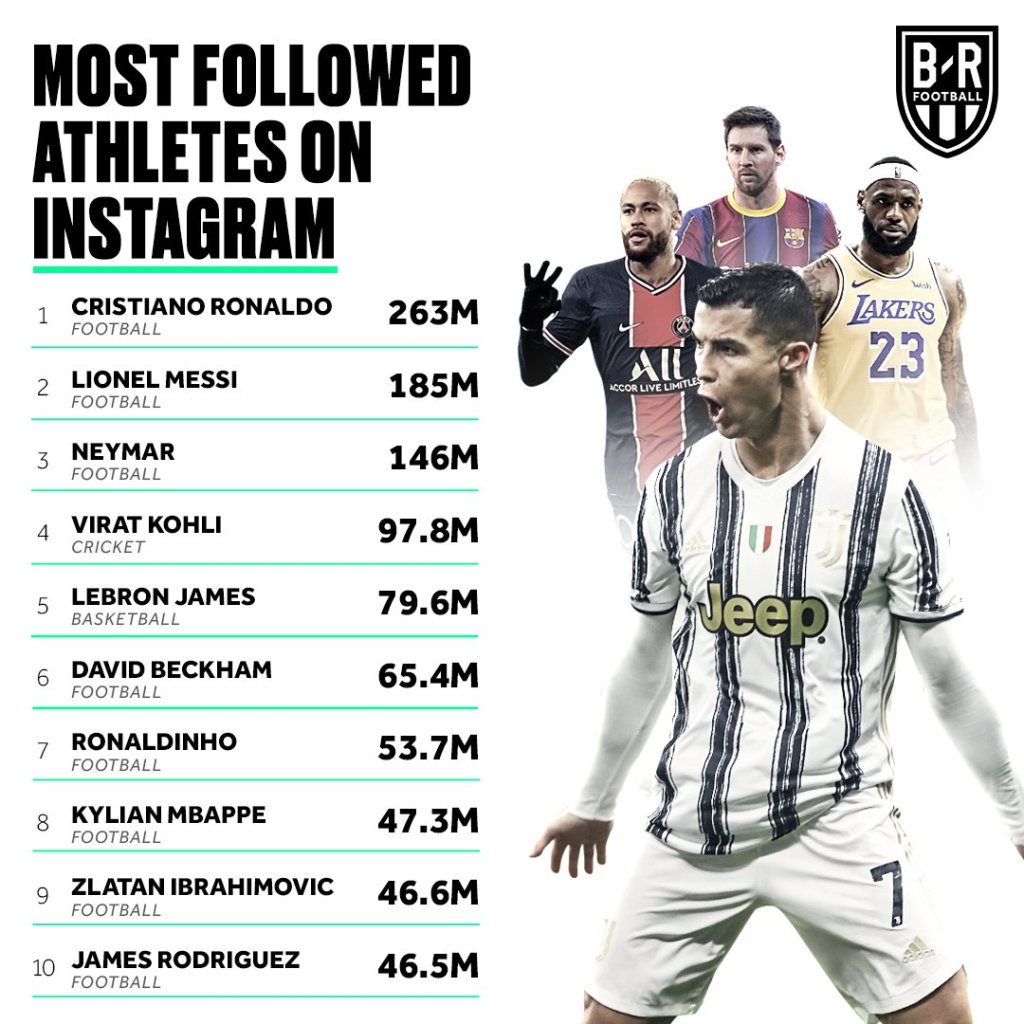
Sport can be used as a political tool by a range of actors. Fans, countries, clubs, and athletes have all used it to promote real change on issues such as social equality, and more recently, environmentalism. Unfortunately, sport can and often has been abused and manipulated by these same actors to ‘sportswash‘, and cover up the abuse of tyrannical regimes. This is due to a variety of factors, but primarily stems from the great social influence sports wields. Sportspeople have a huge reach and cultural sway, becoming brands in their own right, fuelled by the prominence of social and digital media. At the time of writing, Cristiano Ronaldo has the most-followed account on Instagram, with 377 million followers, Lionel Messi finishing second with 290 million. This ease of public outreach is a central theme in sports; it’s why it costs $5.5 million for 30 seconds to advertise at halftime during the Superbowl, and why ALDI partners with Team GB in the Olympics.

The most followed athletes on Instagram, from February earlier this year (Bleacher Report, 2021)

Individual athletes can use their prominence in popular culture and digital media to direct attention to causes, or act as ambassadors to political actors through public diplomacy – even unintentionally. Mohammad Salah is a major example of this, acting as an ambassador for both Egypt and Islam. Following the signing of Salah to Liverpool FC, Merseyside experienced a 16% drop in hate crimes, and Liverpool fans reduced their Islamophobic tweets by half. Exposure to foreign cultures, religions and ‘the unknown’ through sport can greatly reduce intolerance and prejudice, with chants like “If he scores another few, then I’ll be Muslim too” being heard regularly from the Kop end.

This role in popular culture can be done more intentionally too. National icon and hero Marcus Rashford, MBE, is a shining example of the positive change that an individual can achieve from the platform of sport. Topping The Sunday Times Giving List 2021, Rashford has managed to donate 125% of his personal wealth in the past year – and no, that isn’t a typo. While it can feel a tad odd, as a staunch Liverpool fan, to heap praise on a United player, “hunger has no colours”. It’s hard to see how anyone could have an issue with Rashford’s impressive crusade to end child food poverty, but unfortunately, some find a way.

In a WhatsApp group the MP for Dover, Natalie Elphicke, wrote: “would it be ungenerous to say Rashford should have spent more time perfecting his game and less time playing politics?” following a heart-breaking penalty miss in the Euro 2020 final. In other words, “shut up and play”. It was especially ironic, implying Rashford can only commit to one role, considering her own second job, being paid £3,000 a month as Chair of the New Homes Quality Board. It is a commonly held belief that those with a celebrity platform should not speak out for their beliefs. But in my opinion, it is a wrong one. As Rashford himself put it “I’d be doing [my] community and my family a disservice if I did not use my platform to speak on behalf of the millions whose voices are not being heard.” Just as I have every right to speak my thoughts as an unemployed student, there is no reason a professional footballer can’t do the same.

The penalty miss did not just reveal those that feel sportspeople should stay clear of politics – but was also used as an excuse for a despicable wave of racist abuse against Sancho, Saka, and Rashford as well as others.

A racist defiling of a mural supporting Sancho, Saka, and Rashford with their shirt numbers. (Yahoo News, 2021)
A massive show of support by the Rashford mural (Instagram, 2021)

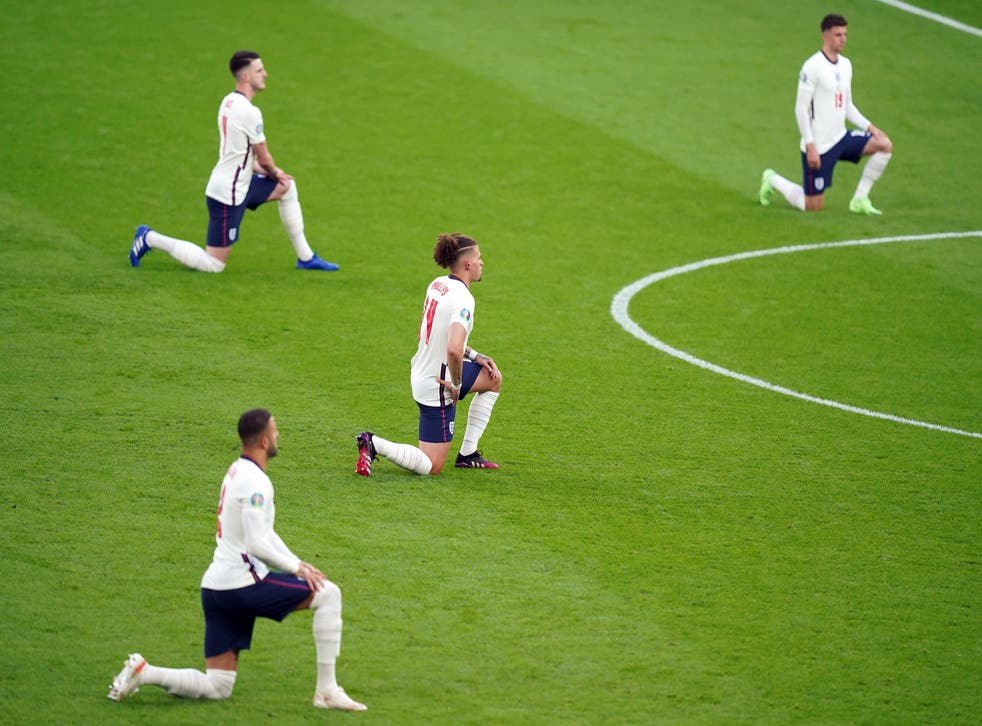
The rise of Twitter and other social media has facilitated many with shameful views to broadcast them directly at the very stars which light up their screen twice a week; spamming their comments with monkey emojis and bombarding their feeds with racist slurs. Despite the nation’s out-pouring of support for these players, the reaction of too many England fans to the missed penalties has highlighted the reason why taking a knee still occurs at the beginning of every Premier League match. Whilst footballers kneel in solidarity, the loud boos echoing from factions within the crowd serve only to underline the need for athletes to keep the conversation about race going. It becomes even starker in some international matches – a recent England-Hungary game being a clear example. Hungarian fans booed the kneeling English players, shouting monkey chants at Raheem Sterling and 18-year-old Jude Bellingham. Battering them 4-0 offered some, minor, solace. The firm message from football stars is clear – there is No Room for Racism in sport, but the light touch of the FA when cracking down on racism sends a very different message.

The battle against racism is not the only social issue seen in sport. Homophobia and anti-LGBTQ+ sentiment remains a rampant issue within sport and, again, particularly in football. The most recent ‘Rainbow Flag’ profile picture by Liverpool FC on Facebook saw over 12,000 ‘angry reacts’, Manchester United saw over 17,000; this is not unique, and is a trend seen across all clubs up and down the sporting pyramid. Look in the comment sections of posts on social media advertising Rainbow Laces games, a partnership campaign aiming at increasing LGBTQ+ inclusiveness within sport, and witness the number of homophobic comments, and “don’t-ask-don’t-tell” style hot takes. The coming out of footballer Josh Cavallo was met with widespread acceptance, but highlighted that there is still far to go in sport. He is the only active male in professional leagues to have come out, statistically, however, it is nigh on impossible that he is the only one. Despite the progress of acceptance campaigns, there is clearly a culture that prevents others from coming out which is something that Josh highlighted in his emotionally charged announcement video. A prominent footballer is a large step in the right direction. Fostering a safe space for all to get involved in sports shouldn’t be necessary, but it is.

Liverpool FC advertising Rainbow Laces, note the Angry Reacts and high comment ratio (Facebook 2021)

However, when a sportsperson speaks out on a specific issue, their silence on others becomes deafening. A stark example of this is Lebron James, and much of the National Basketball Association. While Lebron made his dissatisfaction with FOX News anchor, and political commentator, Laura Ingraham’s comments to “Shut up and dribble” clear, and has been at the heart of social movements to promote social equality in the United States, alongside major charity campaigns to aid impoverished communities, he has been silent on the subject of China.

The authoritarian regime of the Chinese Communist Party has a wild string of humanitarian abuses, ranging from the occupation of Tibet, the horrific treatment of Uyghur Muslims – which some have labelled genocide – and the brutal suppression of Hong Kong pro-democracy protestors. The NBA has long attempted to infiltrate the Chinese market, grow basketball linkages and establish a commercial foothold. With the reservations of many regarding China, and repeated opportunities to speak out when questioned about the actions of the Chinese state, the cold, calculated silence of the vast majority of the players and organisations makes their statements on equality and justice ring hollow. While players have been eager to, rightly, highlight the many social issues within the United States, and the West in general, they have ignored the horrific actions of the Chinese state due to the NBA’s foreign commercial objectives.

Celtics player Enes Kanter is an exception to this money-focused rule, unafraid to call out the blatant “human rights violations” in China, wearing shoes demanding to “FREE TIBET”, and condemned the abuses against Uyghurs in the North-Western province of Xinjiang. Following these commendable actions by Kanter, China blocked all Celtics games from being aired in the country – highlighting the motivation behind other NBA players’ silence. Houston Rockets president, Daryl Morey was another who called out China tweeting, “Stand With Hong Kong” before yielding to pushback from Chinese sponsors and commercial partners. Lebron commented around the discussion of the tweet, claiming Morey “wasn’t educated on the situation at hand“, sidelining the discussion on China – which is especially hypocritical and troubling. Enes Kanter has called out “King James”, and highlighted the hypocrisy of both him, and many sports stars, over their stance, and their advertisement deals with clothing manufacturers, given the linkages between companies like Nike and slave labour.

Athlete activism has therefore become a major aspect of modern reality, fuelled by their huge online presence and reach which facilitate their potential impact on political discourse. Athletes across sport have become heralds of social campaigns, acting as promoters and advocates for their cultures and beliefs. They can use their societal influence to draw attention to campaigns and injustices which inspire social and legislative change. Equally, those that attach themselves to these campaigns who then choose to “shut up and play” over other topics, can invalidate their involvement and actions in areas they choose to get involved in. Just as athletes have a right to voice their opinions and utilise their platforms to promote causes they believe in, their supporters and the public in general have a right to disagree or agree with these views, and call them out if they are hypocritical.

‘I’m Right you’re wrong’: Apathy, Disillusion and the Anti-Vax Movement

Photo by DJ Paine on Unsplash

Any individual’s name referenced within this  blog has been changed out of respect for their privacy and anonymity. Please forward any questions or issues you may have to my email, patrickheywood25@gmail.com. Thank you.

Society as we know it is on the brink of collapse. Living standards are in global decline. Battlelines have fractured nations. The Earth is literally on fire. But when did we all stop caring?

Apathy and disillusionment with mainstream politics is a greater threat now than it has ever been, and if we don’t start paying attention to it soon, then we are complicit in its consequences. Turnout in General Elections has stagnated under 70% for over two decades,  party memberships are at their lowest levels in living memory and many have chosen to reject mass-media altogether. Personally, I don’t blame them.

On the surface, it’s easy to understand. An underrepresented and underappreciated public feel as though their singular vote either doesn’t or hasn’t made much difference in the outcome of recent elections. When they do turn-out, they see little real change, certainly not for the better. We’ve had three Prime Ministers in 10 years and for millions of people their lives have increasingly worsened. Every year the decline becomes more noticeable. Walk through the desolate highstreets of your town, the decaying docklands of the North, the deluge of rubbish amassing in empty city centres, and tell me you feel like the system is working properly. Even when they turn to the opposition, they are greeted with out-of-touch elitism from a party that offers up little more than political noise, and the public don’t like what they are hearing. Infinite monkeys on infinite typewriters churn out miserable horror stories for the unavoidable 24-hour news cycle, whilst social media micro-doses us with enough anger, fear and ‘wholesome’ cat videos to energise us for the day. As we bounce from one ‘once in a generation’ crisis to the next, it seems strikingly obvious why so many of us are choosing to disregard the whole system. Ignorance is bliss.

Though this isn’t anything new. The discourse around voter apathy and its causes has been commonplace since ancient Greece, with Western governments making attempts to tackle misinformation and disillusioned extremism in the 13th and 17th centuries. What differs today is the sheer scale and intention. Never in our lives have powerful individuals with complex, vested interests been given such unprecedented access directly into our minds. The internet, particularly social media, is a whole new ballgame, and too few of us understand the rules. Because of this, we have seen rapid societal disintegration and massive party political dealignment, leading to some of mankind’s most divisive debates. We live in the most polarised time in our history, and continually the internet is at the epicentre of these political hurricanes.

I’m Right you’re wrong’, will explore modern and online voter apathy hoping to understand why greater numbers of individuals are abandoning the mainstream political formats in favour of alternative or, what many would consider, extreme views. Out of respect for the groups or individuals involved this is not about debating their opinions, we have seen that doing this only pushes them further away. This series aims to peer behind the curtain on some of our most polarised debates to hopefully track these changing dynamics to their source. Venturing into their world, the periodical will examine personal testimony from those losing trust in the system and analyse where much of this sentiment spawns from. From ‘Fake News’ and right-wing radicalisation to (hopefully) ‘incels’, climate revolutionaries and the ‘Red-Wall’ the series will head into British society’s heart of darkness and hopefully come out with more understanding about these changing dynamics, and who is driving them. Let’s start with the anti-vax movement.

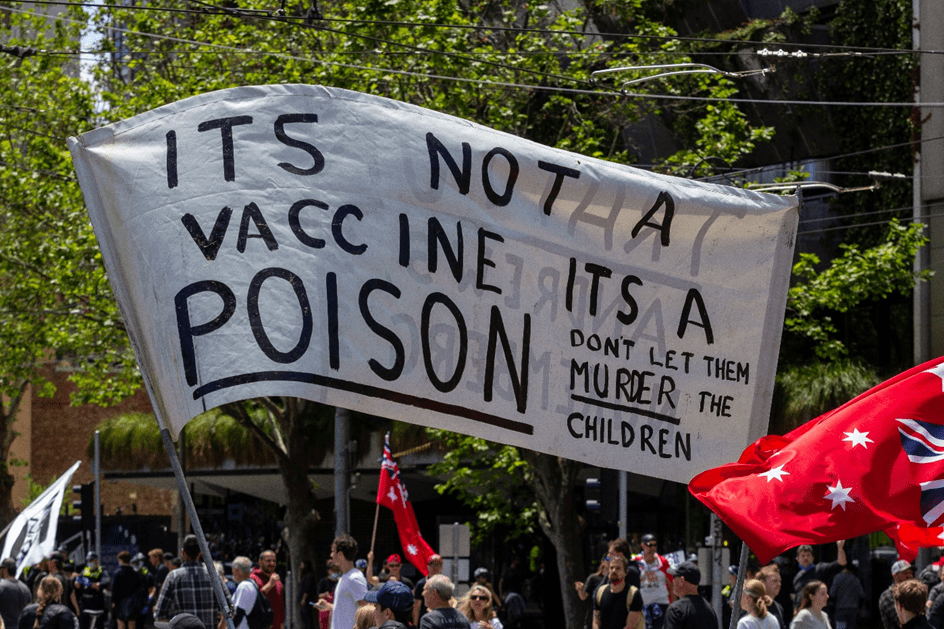
For decades the prevailing orthodoxy has been that the anti-vax movement is isolated and disparate, largely taking place in the United States and wholly obsessed with discredited research that linked vaccines to autism. It seemed logical that this would be another uniquely American problem, especially considering the sheer volume of anti-government sentiment already rooted in the country. However, the arrival of Coronavirus in 2020 brought UK anti-vaxxers out of the woodwork. During the early stages of the pandemic much of this anti-vax sentiment was brushed off as harmless dissidence caused by a lack of information and was mostly directed toward the rejection of Government restrictions. However, across social media I saw growing numbers of previously apathetic people, whom I had ‘followed’ from school, and not bothered to remove, arguing for the first time about politics online. For the most part this consisted of regurgitating extracts or headlines from dubious news sources, and displaying them as fact, but since when did Lola, who failed Year 9 science, know anything about how vaccines are made? Why did Allan from under 16’s rugby suddenly care so much about ‘Civil Liberties’? And where were they getting their information from?

Mulling this over, I stumbled across a litany of anti-vax content shared on the Instagram of someone I had spoken to in several classes throughout school. Although I hadn’t given much thought to whether she was particularly political, Jane didn’t present as a person with unorthodox views. The last I had heard of Jane, close family members of hers had been admitted to hospital with Coronavirus, and thankfully they had recovered. Thus, it came as a surprise when plastered across her Instagram was an American choir burning facemasks in a barrel fire all the while singing a moderately unsettling rendition of Michael Jackson’s We Are the World.

The difference with Jane was that she invited discussion on the topic. She bluntly told anyone that wanted to argue to unfollow her, but anyone that claimed to be “awake”, or looking to learn more, could message her and have a conversation. Led by curiosity, we began a constructive dialogue the very next day. As mistrust in the system was deep rooted, it was vital that I did not go into the exchange under false pretences, thereby tricking Jane into answers. Arguing vehemently with her, would only prove her point and engender further ill will. She agreed to a neutral conversation for the sake of understanding. To be clear, I do not share these views. Simply, you cannot examine what, without first knowing why.

Do you believe COVID-19 is real?

“Covid is real, but it is a flu manipulated into a bigger virus. There is a recorded document that shows COVID-19 being planned in the early 2000s.”

I asked if this document could be related to the SARS outbreak over the same period, but the conversation had already moved on. The idea that Coronavirus has been planned for decades crops up regularly across unmoderated, often right-wing websites that frequently use this as a basis to claim that COVID-19 was made in a lab. The assertion is widely disputed by groups such as the McGill Office for Science and Society. McGill labelled it “patently false” suggesting that there is confusion surrounding the SARS-CoV designation, stating: “When a patent application from the early 2000s refers to ‘SARS-CoV’, it is a different virus than the one we are dealing with now” (1).

Then how do you feel about the vaccine?

“It is very convenient that they created a ‘vaccine’ so quickly. When you think about it, the timeline doesn’t quite add up. If all the ‘clotshot’ manufacturers combined were able to make this at a rate of one dose per second, it would take almost 32 years. Where are the new facilities? Where is the staff recruitment? The vaccine doesn’t stop anyone getting Covid or spreading it. This has been proven by Ireland who published the statistics of all their vaccinated deaths last week. Why get the vaccine when your body produces anti-bodies naturally? Fighting off diseases and viruses naturally.”

Although I didn’t want to argue, I felt compelled to challenge her on the accuracy of those statistics. It categorically was not the case. The first thing that came to mind was the number of flu vaccines produced every year to protect mostly older individuals over winter. Logically we would require vast amounts of those across the globe for annual use. Inspired to ‘do my own research’ the first article that came up on Google was an academic journal from ScienceDirect. Published in 2021 the paper examines the “global production capacity of seasonal and pandemic influenza vaccines in 2019”, the data having been gathered pre-pandemic. The journal estimates that yearly, 1.48 billion doses of the influenza vaccine are produced to deal with seasonal outbreaks and the potential maximum doses, in the case of a global pandemic, are 8.31 billion (2). I put this to her, though purely to see if this made her reconsider her view to any degree.

“You definitely won’t be able to change my views, I know way too much. Also are you getting these statistics from the mainstream media because those figures are extremely corrupted and false? If there was a true vaccine you wouldn’t have to have four vaccines now as well as the booster. The vaccine is an experiment that has not been fully tested so there is no evidence of its future effects. If in five years’ time it’s okay, then fair enough. Plus, if you are fully vaccinated then why is wearing a mask mandatory, clearly you should be protected by it?

I don’t mean to assume but will you not be following the new restrictions then?

“No, I won’t be following the new restrictions, especially the masks that is insanely dangerous, and everyone can easily be exempt. It also says on the box that it doesn’t prevent viruses and there’s no scientific evidence that masks actually help you.”

‘Insanely dangerous’, what do you mean by that?

“Wearing a mask can cause many different illnesses and diseases and there are tonnes of evidence that they can be fatal. Because you are breathing in your own carbon dioxide, as well as mould and the fumes from the plastic, you can contract hypercapnia. Just Google illnesses caused by breathing in carbon dioxide. Construction workers die every year from illnesses caused by facemasks. The maximum time you should be wearing a mask is 20 minutes in a wet environment, 60 minutes in a dry environment. I have a power-point written by two scientists and a health and safety expert about the dangers of masks.”

Extracts from the PowerPoint slides screenshotted by Jane

Since 2020 I think I’ve learnt more about how facemasks work than I had ever known before, although truthfully, this was exclusively from mainstream media sources, and I hadn’t particularly ‘done my own research’. The NIH National Library of Medicine conducted a study evaluating “concentrations of CO2 under various PPE” and concluded that, whilst routine facemask use does cause a significant increase, levels “remain within the limits for short-term use” with further study on long-term usage required (3). This didn’t prove Jane right, but it certainly didn’t prove her wrong. Though, it felt necessary to highlight the fact that there are medical professionals who have been wearing masks for up to 60 hours a day, every week, and surely we would have heard if doctors, nurses or care staff were flagging masks as a health concern? There is no way the media would ignore doctors dying from mask-related illnesses, right?

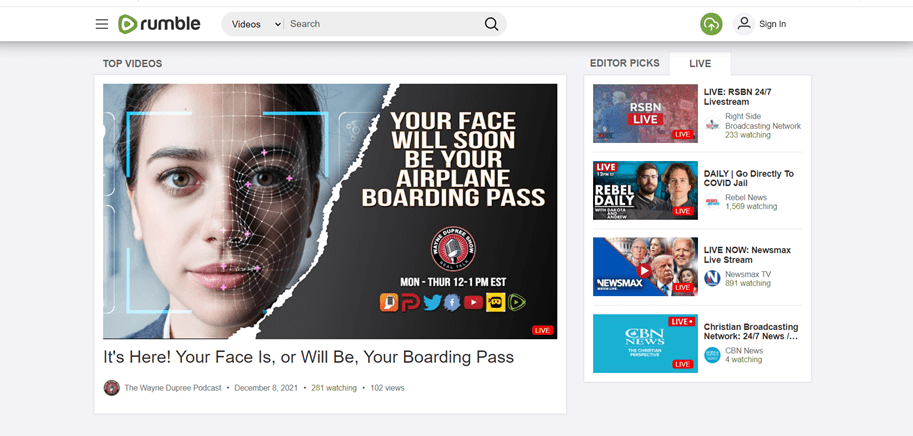
“The news and mainstream media don’t show you what’s really going on. Today’s news talked about the new COVID variant and not the women who’ve been sex trafficked recently in Hull. If the mainstream media didn’t tell everyone about COVID no one would know or care, they panic because the news tells them to. They use untrue statistics, and any adverse reactions are hidden from public view- the Royal College of GPs said the risk of healthy people catching the virus could be increased by wearing masks! Its about distracting us from other issues, it’s all negative and corrupt, working with government to achieve greater control. It’s all over Bitchute and Rumble.”  

To clarify, Bitchute and Rumble are unmoderated, online video sharing platforms similar to YouTube or Vimeo. Running the tagline ‘Help us defend free speech’, Bitchute describes itself as an “independent platform making a stand against excessive internet censorship” (4). The platform provides a space for ‘free-speech’ advocates, primarily on the Right of the political spectrum, who have been removed or demonetised for their views on YouTube. Content creators found to have been sharing fake news, white nationalist or conspiracy videos were banned from the site or had ad revenue streams pulled from their videos and sought refuge on Bitchute in an event known as the 2018 #YouTubePurge (5). Whilst much of the content has always railed against government control, the COVID pandemic and vaccination programme have only added petrol to this fire, with videos comparing mask use to dog muzzles.

Screenshot taken from the home-screen of Bitchute

Rumble is effectively the same thing. Chris Pavlovski, Rumble’s Canadian founder and CEO, states that “Rumble is creating the rails to a new infrastructure that will not be bullied by cancel culture. We are a movement that does not stifle, censor, or punish creativity and freedom of expression. We believe everyone benefits when they have access to more ideas and diverse opinions” (6).

Screenshot taken from the home-screen of Rumble

In terms of politics how would you describe yourself?

“I used to call myself left-wing but that was before I learnt everything, now I don’t really care or label myself because that would be putting myself into their world and I refuse to do that. I wouldn’t vote because it’s already been chosen, it’ll be someone who can be easily manipulated and spread lies fairly easily, they won’t let us actually choose. Also, tax is voluntary, you don’t have to pay for it or mortgages, electricity, gas etc., they’re all basic rights. I know people who have claimed it all back as fraud!”

How did you first get involved in all this and how have people reacted to it?

“I did my own research. My friends understand that it’s my choice and my family are starting to understand it a lot more once I started using common sense and logic. But I know people who have been disowned for their beliefs. I know over 200 people in Yorkshire against COVID ‘vaccines’. We call ourselves ‘awake’, and we meet up every other week to learn from each other.”

How would I get into an ‘awake’ group and what are they like?

“There’s loads of groups all over the country. The one I’m a part of was actually set up by my parents and their friend who set up the initial Facebook page. You get into them by being invited by someone in the group, but we have had tonnes of infiltrations that spread negativity and try to break us up. The people are truly amazing, so happy, positive and insanely intelligent. We start with a meditation session and then go over two alternating subjects each week with someone in the group doing a talk. We have musicians and amazing cooks, so we all bring home cooked food and have live music and just hang out. They are truly my soul family; I love them to death.”

By the end of our discussion it became clear that much of the hysteria around vaccines was stemming from a handful of unmonitored, unsubstantiated online sources, with dubious real-world intentions. The whole process was emblematic of right-wing radicalisation, which, largely through fear, had turned a left-wing supporter completely on their head. Through mirroring the language of the liberal left, right-wing actors manipulate individuals into advocating for smaller government, individual liberties and reduced taxation, directly into the welcoming arms of conservative policy that would largely benefit the people Jane claimed to be against. Whilst individually the consequences of Jane’s realignment are negligible, we are seeing this on a mass scale, with Jane herself knowing “200 people in Yorkshire” alone who have departed from mainstream politics. The ‘awake group’ sounded reassuringly warm and welcoming and echoed much of the sentiment found in neo-evangelist organisations. Much like religion it is abundantly clear that these groups operate on the basis of faith, belief and worship. But to really understand it, I knew I had to go to this meeting. Procuring my invite from Jane, I was to attend the following Monday.

Commons Sense (subject to change) is a British political media project, co-written by post-graduate students Eamonn West and Patrick Heywood, which aims to educate, investigate and commentate on some of what we believe to be the most pressing issues facing the UK today. We hope this undertaking can shine a light on this tumultuous time for our political system and maybe, if we’re lucky, entertain along the way. For more information about us and what we stand for at CS, visit our introductory page here:

Hello World!

Sources:

  1. Jarry, J., 2021. Patently False: The Disinformation Over Coronavirus Patents. [online] McGill: Office for Science and Society. Available at: <https://www.mcgill.ca/oss/article/covid-19-pseudoscience/patently-false-disinformation-over-coronavirus-patents&gt; [Accessed 9 December 2021].
  2. Sparrow, E., Wood, J., Chadwick, C., Newall, A., Torvaldsen, S., Moen, A. and Torelli, G., 2021. Global production capacity of seasonal and pandemic influenza vaccines in 2019. ScienceDirect. Vaccine, 39(3), pp.512-520.
  3. Rhee, M., Lindquist, C. D., Silvestrini, M. T., Chan, A. C., Ong, J., & Sharma, V. K. (2021). Carbon dioxide increases with face masks but remains below short-term NIOSH limits. BMC infectious diseases, 21(1), 354. https://doi.org/10.1186/s12879-021-06056-0
  4. BitChute. 2021. Help Us Grow. [online] BitChute. Available at: <https://www.bitchute.com/help-us-grow/&gt; [Accessed 9 December 2021].
  5. Schroeder, A., 2021. Far-right conspiracy vloggers have a new home. [online] The Daily Dot. Available at: <https://www.dailydot.com/upstream/bitchute/&gt; [Accessed 9 December 2021].
  6. Pavlovski, C., 2021. A Personal Note from the CEO of Rumble, Chris Pavlovski – Rumble. [online] Rumble. Available at: <https://story.rumble.com/a-personal-note-from-the-ceo-of-rumble-chris-pavlovski/&gt; [Accessed 9 December 2021].

Hello World!

Hello and welcome to our blog, Commons Sense! We are both very much new to this and will make errors and mistakes along the way, but are excited to improve and grow our blog as it goes along.

We plan on publishing one blog a week, rotating between Patrick and myself- though, with both of us in full-time studies, we hope this isn’t easier said than done! Our blog contents will likely vary a lot as we both have full creative license over our own work, which means you get the enjoyment of two, often quite different, perspectives and topic discussions.

Thanks for taking the time to read- and any interaction, whether that is a comment, like, or email is greatly appreciated and highly encouraged. We would love to hear your thoughts and discuss with you about any of the contents of our blog. If you’d like to hear our opinions, or for us to write about something in particular, feel more than free to email us or leave a comment!