
When I sit down and watch Liverpool every week, I want to switch off from it all and forget about the troubles of the world for 90 minutes. I want to get angry about little, inconsequential things like Bobby Firmino missing a sitter, or the Referee forgetting to book his appointment at Specsavers. The desire to forget about the many issues plaguing the world is a popular one, and sport is just one of many entertainment mediums which people use as an escape. But it is a desire that forgets the agency of the players, the reach and potential that sport has in political communication, as well as the pervading influence of politics in all aspects of life.
If you go to the pub and talk about sports in politics, you will likely hear arguments like “keep politics out of sport”, or perhaps the harsher “shut up and play”. While I understand these sentiments, politics is entangled in every facet of life – no more so than in the multi-billion-pound industry that is sport.
With a global reach in the billions, sports are engrained in the culture of society. Regardless of whether or not you believe politics should have a place in sport, in reality, it already does – and is firmly entrenched. Sports clubs can have deep socio-political links; Liverpool FC has significant socialist roots, sectarian and nationalist conflicts are at the heart of the Rangers-Celtic rivalry, and FC Barcelona has historically been a symbol of Catalonian independence. The Spanish central government must love Bayern Munich.
Whole nations have been accused of using clubs and hosting sporting events in an effort to engage in public diplomacy, and to ‘sportswash‘ their tarnished reputations. Saudi owned Newcastle United is just the latest in a growing line of countries using sports clubs to push forward a positive image of their nations. Modern athletes such as Colin Kaepernick have had a huge impact on political discourse, building on the influence wielded by sporting greats like Muhammad Ali during his refusal to be drafted in the Vietnam War.
Patriotism and nationalism intertwine with international sport, with players and fans alike belting out their country’s anthem before a game, proudly chanting patriotic hymns about “Ten German Bombers in the Air“. COVID-19 has only increased the direct role of politics within sport, sparking debates over whether to allow crowds, on mandatory vaccination for attendees and even, for a time, if matches should be allowed to continue at all. Yet, the role of politics is not new for sports; it has been central to the field for as long as it is possible to trace.
Quickly skimming through history, this relationship is seen in classical Rome, which used sport to keep the masses distracted and happy, the 532 AD Nika chariot riots in Constantinople which nearly forced their emperor into exile, and in Ancient Greece where an Olympic Truce was established to allow athletes safe travel to the games. Even today, cricket’s best nations trace the colonial map of the former British Empire, with European colonial powers exporting their games across the globe. This series, “Playing Politics”, will discuss the intrinsic role of politics within sports, exploring why you simply cannot disentangle this contradictory couple. Sport always has been, and likely always will be, deeply tied to politics – for better or worse.
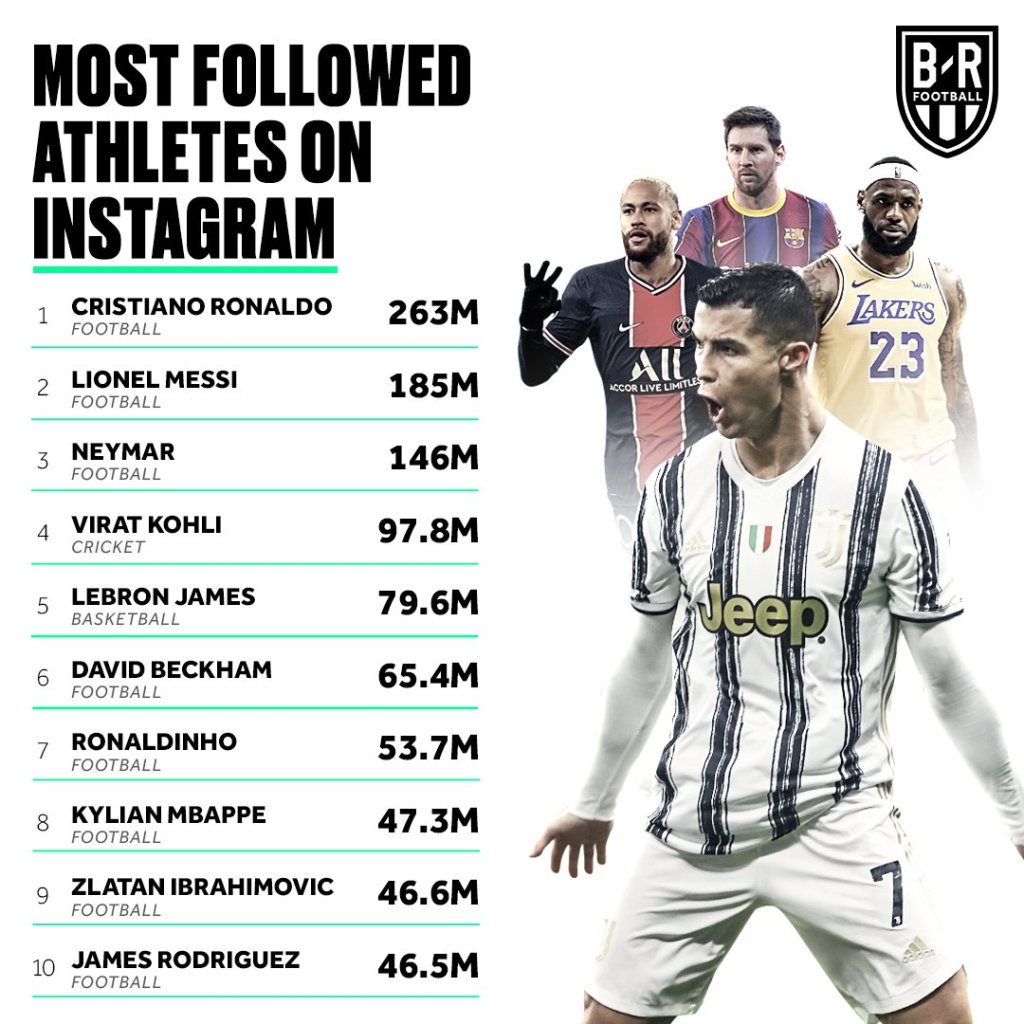
Sport can be used as a political tool by a range of actors. Fans, countries, clubs, and athletes have all used it to promote real change on issues such as social equality, and more recently, environmentalism. Unfortunately, sport can and often has been abused and manipulated by these same actors to ‘sportswash‘, and cover up the abuse of tyrannical regimes. This is due to a variety of factors, but primarily stems from the great social influence sports wields. Sportspeople have a huge reach and cultural sway, becoming brands in their own right, fuelled by the prominence of social and digital media. At the time of writing, Cristiano Ronaldo has the most-followed account on Instagram, with 377 million followers, Lionel Messi finishing second with 290 million. This ease of public outreach is a central theme in sports; it’s why it costs $5.5 million for 30 seconds to advertise at halftime during the Superbowl, and why ALDI partners with Team GB in the Olympics.
Individual athletes can use their prominence in popular culture and digital media to direct attention to causes, or act as ambassadors to political actors through public diplomacy – even unintentionally. Mohammad Salah is a major example of this, acting as an ambassador for both Egypt and Islam. Following the signing of Salah to Liverpool FC, Merseyside experienced a 16% drop in hate crimes, and Liverpool fans reduced their Islamophobic tweets by half. Exposure to foreign cultures, religions and ‘the unknown’ through sport can greatly reduce intolerance and prejudice, with chants like “If he scores another few, then I’ll be Muslim too” being heard regularly from the Kop end.
This role in popular culture can be done more intentionally too. National icon and hero Marcus Rashford, MBE, is a shining example of the positive change that an individual can achieve from the platform of sport. Topping The Sunday Times Giving List 2021, Rashford has managed to donate 125% of his personal wealth in the past year – and no, that isn’t a typo. While it can feel a tad odd, as a staunch Liverpool fan, to heap praise on a United player, “hunger has no colours”. It’s hard to see how anyone could have an issue with Rashford’s impressive crusade to end child food poverty, but unfortunately, some find a way.
In a WhatsApp group the MP for Dover, Natalie Elphicke, wrote: “would it be ungenerous to say Rashford should have spent more time perfecting his game and less time playing politics?” following a heart-breaking penalty miss in the Euro 2020 final. In other words, “shut up and play”. It was especially ironic, implying Rashford can only commit to one role, considering her own second job, being paid £3,000 a month as Chair of the New Homes Quality Board. It is a commonly held belief that those with a celebrity platform should not speak out for their beliefs. But in my opinion, it is a wrong one. As Rashford himself put it “I’d be doing [my] community and my family a disservice if I did not use my platform to speak on behalf of the millions whose voices are not being heard.” Just as I have every right to speak my thoughts as an unemployed student, there is no reason a professional footballer can’t do the same.
The penalty miss did not just reveal those that feel sportspeople should stay clear of politics – but was also used as an excuse for a despicable wave of racist abuse against Sancho, Saka, and Rashford – as well as others.


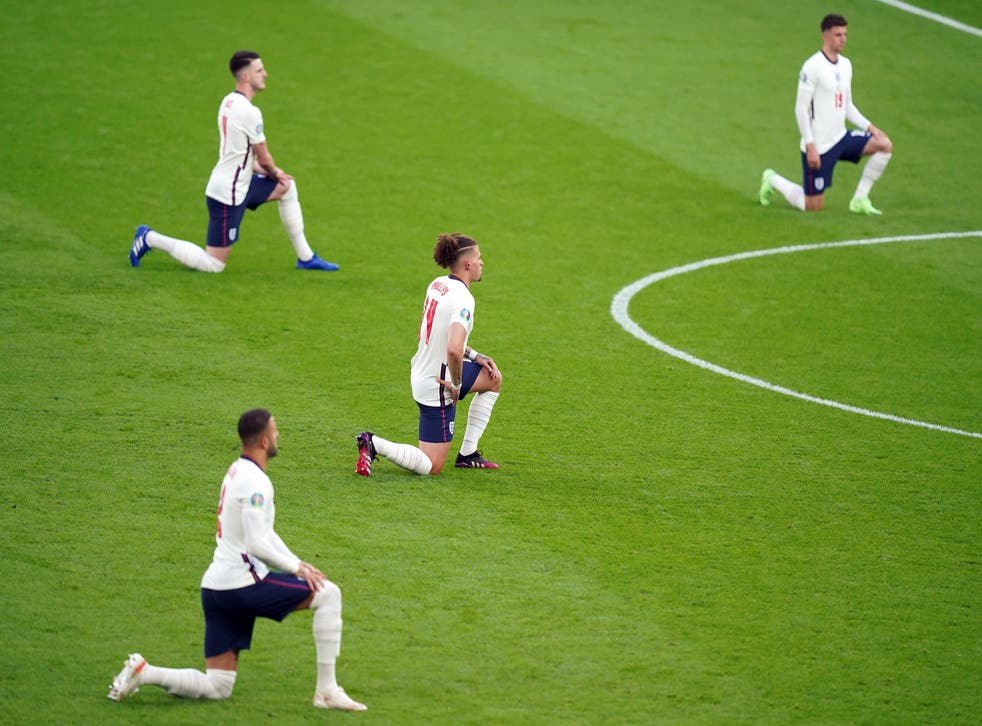
The rise of Twitter and other social media has facilitated many with shameful views to broadcast them directly at the very stars which light up their screen twice a week; spamming their comments with monkey emojis and bombarding their feeds with racist slurs. Despite the nation’s out-pouring of support for these players, the reaction of too many England fans to the missed penalties has highlighted the reason why taking a knee still occurs at the beginning of every Premier League match. Whilst footballers kneel in solidarity, the loud boos echoing from factions within the crowd serve only to underline the need for athletes to keep the conversation about race going. It becomes even starker in some international matches – a recent England-Hungary game being a clear example. Hungarian fans booed the kneeling English players, shouting monkey chants at Raheem Sterling and 18-year-old Jude Bellingham. Battering them 4-0 offered some, minor, solace. The firm message from football stars is clear – there is No Room for Racism in sport, but the light touch of the FA when cracking down on racism sends a very different message.
The battle against racism is not the only social issue seen in sport. Homophobia and anti-LGBTQ+ sentiment remains a rampant issue within sport and, again, particularly in football. The most recent ‘Rainbow Flag’ profile picture by Liverpool FC on Facebook saw over 12,000 ‘angry reacts’, Manchester United saw over 17,000; this is not unique, and is a trend seen across all clubs up and down the sporting pyramid. Look in the comment sections of posts on social media advertising Rainbow Laces games, a partnership campaign aiming at increasing LGBTQ+ inclusiveness within sport, and witness the number of homophobic comments, and “don’t-ask-don’t-tell” style hot takes. The coming out of footballer Josh Cavallo was met with widespread acceptance, but highlighted that there is still far to go in sport. He is the only active male in professional leagues to have come out, statistically, however, it is nigh on impossible that he is the only one. Despite the progress of acceptance campaigns, there is clearly a culture that prevents others from coming out which is something that Josh highlighted in his emotionally charged announcement video. A prominent footballer is a large step in the right direction. Fostering a safe space for all to get involved in sports shouldn’t be necessary, but it is.

However, when a sportsperson speaks out on a specific issue, their silence on others becomes deafening. A stark example of this is Lebron James, and much of the National Basketball Association. While Lebron made his dissatisfaction with FOX News anchor, and political commentator, Laura Ingraham’s comments to “Shut up and dribble” clear, and has been at the heart of social movements to promote social equality in the United States, alongside major charity campaigns to aid impoverished communities, he has been silent on the subject of China.
The authoritarian regime of the Chinese Communist Party has a wild string of humanitarian abuses, ranging from the occupation of Tibet, the horrific treatment of Uyghur Muslims – which some have labelled genocide – and the brutal suppression of Hong Kong pro-democracy protestors. The NBA has long attempted to infiltrate the Chinese market, grow basketball linkages and establish a commercial foothold. With the reservations of many regarding China, and repeated opportunities to speak out when questioned about the actions of the Chinese state, the cold, calculated silence of the vast majority of the players and organisations makes their statements on equality and justice ring hollow. While players have been eager to, rightly, highlight the many social issues within the United States, and the West in general, they have ignored the horrific actions of the Chinese state due to the NBA’s foreign commercial objectives.
Celtics player Enes Kanter is an exception to this money-focused rule, unafraid to call out the blatant “human rights violations” in China, wearing shoes demanding to “FREE TIBET”, and condemned the abuses against Uyghurs in the North-Western province of Xinjiang. Following these commendable actions by Kanter, China blocked all Celtics games from being aired in the country – highlighting the motivation behind other NBA players’ silence. Houston Rockets president, Daryl Morey was another who called out China tweeting, “Stand With Hong Kong” before yielding to pushback from Chinese sponsors and commercial partners. Lebron commented around the discussion of the tweet, claiming Morey “wasn’t educated on the situation at hand“, sidelining the discussion on China – which is especially hypocritical and troubling. Enes Kanter has called out “King James”, and highlighted the hypocrisy of both him, and many sports stars, over their stance, and their advertisement deals with clothing manufacturers, given the linkages between companies like Nike and slave labour.
Athlete activism has therefore become a major aspect of modern reality, fuelled by their huge online presence and reach which facilitate their potential impact on political discourse. Athletes across sport have become heralds of social campaigns, acting as promoters and advocates for their cultures and beliefs. They can use their societal influence to draw attention to campaigns and injustices which inspire social and legislative change. Equally, those that attach themselves to these campaigns who then choose to “shut up and play” over other topics, can invalidate their involvement and actions in areas they choose to get involved in. Just as athletes have a right to voice their opinions and utilise their platforms to promote causes they believe in, their supporters and the public in general have a right to disagree or agree with these views, and call them out if they are hypocritical.
 Commons Sense